The Data Fragmentation Problem
Every crypto AI agent eventually runs into the same wall: to understand the market, you need data from a dozen different categories. Health scores, derivatives positioning, sentiment indicators, stablecoin flows, macro conditions, ETF inflows, cycle metrics, and coin fundamentals — each requiring a separate API call, each with its own response format, each consuming tokens in your agent’s context window.
A typical “market overview” query requires:
- Market health score (1 call)
- Fear & Greed index (1 call)
- Funding rates (1 call)
- Open interest (1 call)
- Liquidations (1 call)
- Stablecoin flows (1 call)
- Macro indicators (1 call)
- ETF flows (1 call)
- BTC cycle indicators (1 call)
- Top coin prices (1 call)
That’s 10 API calls before your agent can even begin reasoning. Each call adds latency, consumes rate-limit budget, and bloats the context with JSON boilerplate. For agents running on a loop, this overhead compounds into a serious performance and cost problem.
What /daily Returns
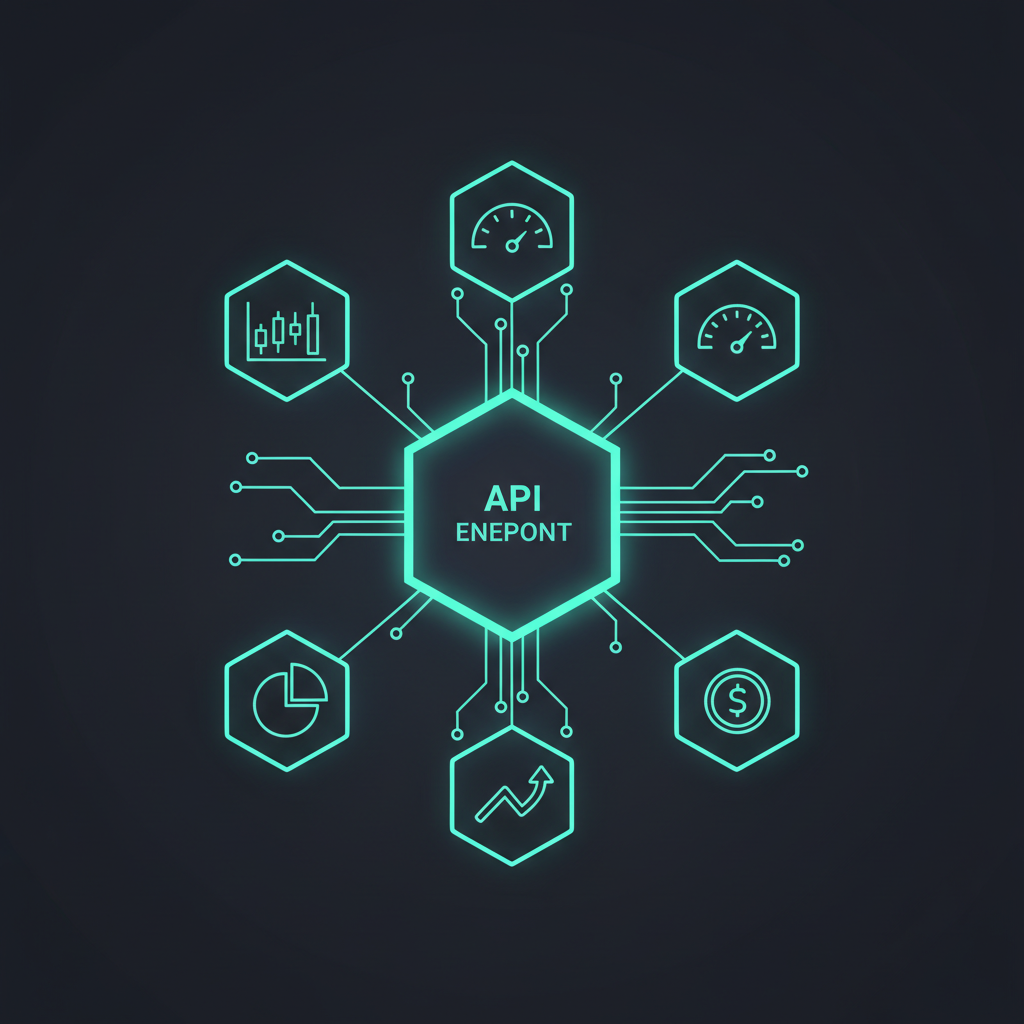
The /api/v1/daily endpoint solves this by returning the entire market state in a single response. Here’s what you get:
| Section | Contents |
|---|---|
| Market Health | Total score, long-term/short-term scores, state, sentiment |
| Fear & Greed | Multi-source averaged index value + classification |
| Derivatives | Funding rates, open interest, liquidation volumes, L/S ratios |
| Stablecoins | Total market cap, 14d/90d flows |
| Macro | EUR/USD, gold, DXY, treasury yields (2Y, 10Y, 30Y) |
| ETF Flows | BTC/ETH spot ETF daily net inflows |
| Cycle Indicators | 8 BTC cycle metrics (MVRV, NUPL, Puell, etc.) |
| Coins | Top coins by market cap with prices and changes |
curl -H "X-API-Key: cdk_live_yourkey" \
  https://cryptodataapi.com/api/v1/daily

# Returns a single JSON object with all sections above
# Typical response size: ~150-300KB depending on coin filter
One call. One response. Everything your agent needs to assess the current market state.
Before vs After: 10 Calls → 1
Here’s the before-and-after for a typical agent architecture:
Before: 10 sequential API calls
# Old approach — 10 calls, 10 response schemas, ~2-5 seconds total
health = await fetch("/market-health/summary")
fear_greed = await fetch("/sentiment/fear-greed")
funding = await fetch("/market-intelligence/funding-rates")
oi = await fetch("/market-intelligence/open-interest")
liqs = await fetch("/market-intelligence/liquidations")
stables = await fetch("/sentiment/stablecoins")
macro = await fetch("/sentiment/macro")
etf = await fetch("/market-intelligence/etf/btc/flows")
cycle = await fetch("/market-intelligence/btc/cycle-indicators")
coins = await fetch("/coins/top")

# Then merge all 10 responses into one context...
After: 1 call
# New approach — 1 call, 1 response, ~500ms
snapshot = await fetch("/daily")

# Everything is already merged and structured
health = snapshot["market_health"]
fear_greed = snapshot["fear_greed"]
funding = snapshot["derivatives"]["funding_rates"]
# ... etc
The benefits go beyond just fewer HTTP round-trips:
- Lower latency: one request vs ten means your agent responds faster
- Fewer tokens: one JSON structure with no redundant boilerplate
- Atomic snapshot: all data from the same point in time, no clock skew between calls
- Simpler tools: your agent needs one tool definition, not ten
- Rate-limit friendly: 1 request counted instead of 10
Parsing the Response
The daily snapshot response is a flat-ish JSON object with named sections. Here’s how to access specific data:
import httpx

async def get_snapshot():
    async with httpx.AsyncClient() as client:
        r = await client.get(
            "https://cryptodataapi.com/api/v1/daily",
            headers={"X-API-Key": "cdk_live_yourkey"}
        )
        data = r.json()

    # Market regime
    state = data["market_health"]["state"]  # "confirmed_bull"
    score = data["market_health"]["total_score"]  # 72

    # Sentiment
    fg = data["fear_greed"]["value"]  # 58
    fg_class = data["fear_greed"]["classification"]  # "Neutral"

    # Macro context
    dxy = data["macro"]["dxy"]  # 104.2
    gold = data["macro"]["gold"]  # 2,650

    return data
For even easier LLM consumption, use ?format=markdown:
curl -H "X-API-Key: cdk_live_yourkey" \
  "https://cryptodataapi.com/api/v1/daily?format=markdown"

# Returns structured markdown instead of JSON:
# # Daily Market Snapshot
# ## Market Health
# - **Total Score:** 72/100 (Bullish)
# - **State:** confirmed_bull
# ...
The markdown format is significantly more token-efficient than JSON and can be injected directly into an LLM’s context without parsing.
Use Cases
The daily snapshot powers a wide range of agent workflows:
Research & Analysis
Feed the snapshot into an LLM with a prompt like “Analyze this market data and identify the top 3 opportunities and risks.” The agent has everything it needs in one context window.
Alerting
Poll /daily on a schedule and trigger alerts when specific conditions are met: health score drops below 40, funding rates exceed 0.1%, stablecoin outflows exceed $500M, etc.
Reporting
Generate daily or weekly market reports by feeding snapshots to an LLM with a report template. The consistent structure means your reports are always formatted correctly.
Trading Signals
Use the health score + cycle indicators + derivatives data to generate systematic trading signals. The snapshot gives you all the inputs your model needs without managing multiple data pipelines.
Stop Making 10 Calls When 1 Will Do
The /daily endpoint exists because we saw every AI agent team building the same data-merging layer on top of our individual endpoints. Rather than making every team solve the same problem, we solved it once in the API itself.
If your agent needs a broad market overview — and most do — start with /daily. Drill into specific endpoints only when you need deeper data on a particular topic.
Try it now:
curl -H "X-API-Key: YOUR_KEY" \
  https://cryptodataapi.com/api/v1/daily
Get your free API key at cryptodataapi.com (1,000 requests/day, no credit card required).