Why the Best Traders Trade Against the Crowd
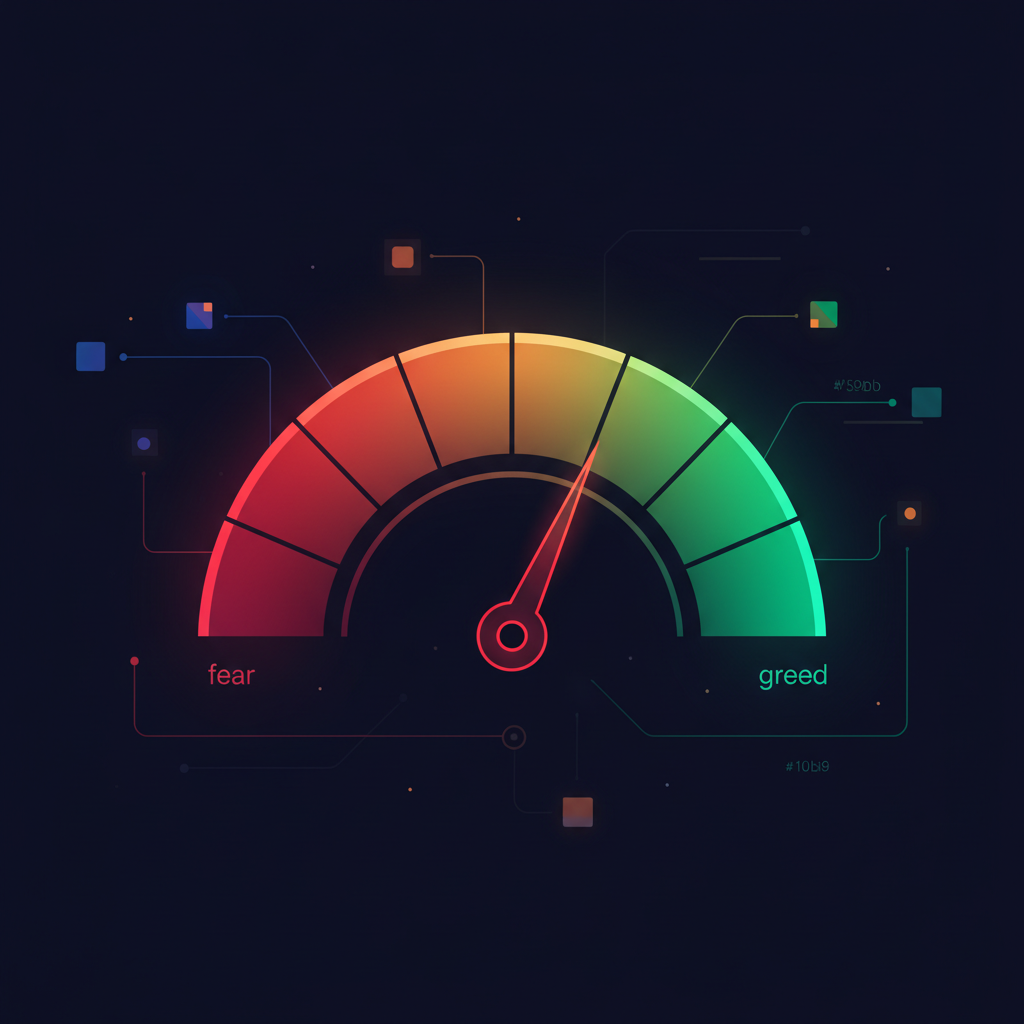
Warren Buffett’s famous advice — “be fearful when others are greedy, and greedy when others are fearful” — applies to crypto with particular force. The crypto market is dominated by retail sentiment, and extreme readings on the Fear & Greed Index have historically been powerful contrarian signals.
When the index drops below 20 (Extreme Fear), it often coincides with capitulation events where weak hands sell at local bottoms. When it exceeds 80 (Extreme Greed), euphoria drives prices beyond sustainable levels. Neither condition persists indefinitely, and mean reversion is the norm.
The challenge for automated trading systems is accessing reliable, real-time sentiment data. Single-source Fear & Greed indices can be noisy or go offline at the worst possible moment. Crypto Data API solves this by aggregating multiple independent sources into a single, robust score.
Multi-Source Aggregation: Why One Source Is Not Enough
Most traders rely on a single Fear & Greed provider, typically Alternative.me. The problem? Any single source can:
- Go offline during volatile markets (exactly when you need it most)
- Lag behind rapidly changing conditions due to slow update cycles
- Incorporate methodology biases that skew readings in specific market regimes
Crypto Data API aggregates up to three independent sources and averages them into a composite score:
| Source | Methodology | Update Frequency |
|---|---|---|
| Alternative.me | Volatility, volume, social media, dominance, trends | Daily |
| CoinMarketCap | Proprietary multi-factor model | Daily |
| CoinGlass | Derivatives-weighted sentiment | Hourly |
The averaging approach smooths out single-source noise and provides a more reliable reading. If any source goes offline, the remaining sources continue to produce a valid score — graceful degradation built into the API.
The Fear & Greed Endpoint in Practice
A single GET request returns the composite score, classification, and individual source values:
curl -H "X-API-Key: YOUR_KEY" \
  https://cryptodataapi.com/api/v1/sentiment/fear-greed

{
  "value": 42,
  "classification": "Fear",
  "sources": ["alternative_me", "coinmarketcap", "coinglass"],
  "individual_values": {
    "alternative_me": 38,
    "coinmarketcap": 44,
    "coinglass": 43
  }
}
The classification field maps the composite score to human-readable sentiment levels:
| Score Range | Classification | Contrarian Implication |
|---|---|---|
| 0–25 | Extreme Fear | Potential accumulation zone |
| 26–40 | Fear | Market undervalued, watch for reversal |
| 41–60 | Neutral | No strong signal, use other indicators |
| 61–75 | Greed | Market heating up, tighten stops |
| 76–100 | Extreme Greed | Potential distribution zone |
The individual_values object lets you see how each source diverges from the consensus. Large divergences between sources can themselves be a signal — if derivatives-weighted sentiment (CoinGlass) is extremely greedy while survey-based sentiment is neutral, it may indicate leveraged speculation ahead of a correction.
Building an Automated Contrarian Strategy
Here’s a Python implementation that uses Fear & Greed as a position sizing filter for your trading bot:
import httpx

async def sentiment_position_filter(
    api_key: str, base_position_size: float
) -> dict:
    """Adjust position size based on contrarian sentiment."""
    async with httpx.AsyncClient() as client:
        resp = await client.get(
            "https://cryptodataapi.com/api/v1/sentiment/fear-greed",
            headers={"X-API-Key": api_key},
        )
        data = resp.json()

    score = data["value"]
    classification = data["classification"]

    # Contrarian sizing: increase longs during fear,
    # reduce during greed
    if score <= 20:  # Extreme Fear
        multiplier = 1.5
    elif score <= 35:  # Fear
        multiplier = 1.2
    elif score >= 80:  # Extreme Greed
        multiplier = 0.5  # halve exposure
    elif score >= 65:  # Greed
        multiplier = 0.75
    else:
        multiplier = 1.0  # Neutral, no adjustment

    return {
        "sentiment_score": score,
        "classification": classification,
        "position_size": base_position_size * multiplier,
        "multiplier": multiplier,
    }
This approach doesn’t try to pick tops and bottoms — it adjusts exposure based on where sentiment sits. During Extreme Fear, the bot increases position sizes for long entries. During Extreme Greed, it reduces exposure and tightens risk management.
Combining Sentiment with Other Signals
Fear & Greed works best as a confirmation layer, not a standalone strategy. The highest-conviction setups emerge when sentiment aligns with structural indicators:
High-Conviction Long Setup
- Fear & Greed ≤ 25 (Extreme Fear)
- Stablecoin 90-day inflows > 5% (fresh capital entering)
- Funding rates negative (shorts paying longs)
- Market Health Score improving from oversold
High-Conviction Risk Reduction
- Fear & Greed ≥ 80 (Extreme Greed)
- Stablecoin inflows decelerating or turning negative
- Funding rates elevated > 0.05%
- Open interest at all-time highs with price stalling
Every one of these data points is available through Crypto Data API — Fear & Greed, stablecoin flows, derivatives intelligence, and market health scores. Building a multi-factor sentiment model becomes trivial when all the data comes from one source.
Put your sentiment strategy to work on Binance — register here for spot and futures trading with the deepest liquidity in crypto.
Automate Sentiment Analysis, Don’t Trust Your Gut
Human traders are notoriously bad at sentiment analysis because they are the sentiment. When the market is crashing, you feel the fear. When it’s mooning, you feel the greed. Automating sentiment-based decisions removes this emotional bias entirely.
Crypto Data API’s multi-source Fear & Greed endpoint gives your trading bot an objective, reliable sentiment reading that updates hourly and degrades gracefully when sources go offline. Combined with the rest of the API’s data suite, you can build sophisticated contrarian strategies that would take months to assemble from scratch.
Stop making emotional trades and start making data-driven ones.